
Into the Forest Part 2
Animals, enchantment and searching for wild thought

Beyond the human
‘Why ask anthropology to look beyond the human? And why look to animals to do so? Looking at animals, who look back at us and look with us, and who are also ultimately part of us, even though their lives extend way beyond us, can tell us something. It can tell is about how that which lies beyond the human also sustains us, and makes us the beings we are, and those we might become.’
- Eduardo Kohn, How Forests Think: An Anthropology Beyond the Human.
‘These were the most abject and miserable creatures I anywhere beheld. These poor wretches were stunted in their growth, their hideous faces bedaubed with white paint, their skins filthy and greasy, their hair entangled, their voices discordant, and their gestures violent...Their skill in some respects may be compared to the instinct of animals...We can hardly put ourselves in the position of these savages, and understand their actions.’
- Charles Darwin (on the Yagan People of Tierra del Fuego), A Naturalist’s Voyage Round the World
Intro note: In the first part of Into the Forest, a loose blog on South America, I referenced Eduardo Kohn’s work ‘How Forests Think’, to try to explore how we interact with the natural world in a time of intense relationships with technology. Here, I want to reflect on our relationship with animals. Again, I’ll use Kohn but a bit less (there will be more pictures).
Dealing with Darwin
As I travel further through South America, I notice the name of Charles Darwin keeps popping up. From the fjords and ice shields of Chile, to Tierra Del Fuego and throughout the Galapagos islands, there is an incredible amount of places, artisan beers, and even entire species of plants, animals and dinosaurs named after him; he really is everywhere in this part of the world.
But every time I hear his name, I can’t help but think it’s all a bit excessive, or even insensitive to the original inhabitants of lands through which he travelled. Particularly on Galapagos, which in places resembles a shrine to Darwin, it seems a bit of a travesty that this previously intact environment, famously free of human intervention, is now almost entirely synonymous with the theories of a white western Englishman operating within the 19th century imperialist network.
Darwin was undoubtedly progressive for his time, but that time was a thoroughly regressive one, where the most virulent conceptions of racism and reductionist science were used to justify greed, slaughter and conquest around the world. He may have been vocally opposed to worst of these arguments, but the dominant theories of that age undoubtedly informed his approach, as can be seen in his reflections on the Yagan people of Tierra del Fuego.
Darwin was influential even in his own time and had he not been so dismissive of their civilisation in his memoirs, the nascent Argentinean and Chilean nations may have been held to greater account in driving them into extinction. This argument is a bit of a stretch, I admit, but it is astounding just how recently the genocide of native people’s Tierra del Fuego, the southernmost parts of what we now call Chile and Argentina, took place. The genocide of the Selk'nam people for example continued until the early 20th century.
One of the most shocking things I have come across so far in South America is the very recent decimation of the Yagan people. Traditionally clothes-less, their method of continual fire-burning in this very chilly part of the world is what gave the region it’s name- ‘land of fire’. When Christian missionaries arrived to the Tierra del Fuego in the late 19th century, they brought with them a range of diseases that spread in the blankets given to the native people’s of the region. Yagan numbers plummeted and steadily declined over the next century. The last Yagan speaker died in 2022.
Although he can’t be held responsible for it, the echo chamber manner in which Victorian society operated meant that Darwin’s theories were then used by others to justify further expansion by colonists and even genocide. The concept of ‘Social Darwinism’, in which biological arguments, namely the ‘survival of the fittest’ aspect of evolution theory, are used to justify laisse faire capitalism and humanitarian neglect, gained momentum in Britain of the 19th century (it was in this atmosphere that the great famines of India and Ireland played out under empire) and continued to form a core aspect of right wing politics and crude racism for years afterwards.
For anyone humane or progressive, these arguments are now seen as monstrous and nonsensical, but when it comes to animals, the fundamentals of evolution theory and much of the simplistic language attached to it, remain so overwhelmingly influential that I think they have limited our very comprehension of animals. To be clear- I’m not arguing against evolution; my main gripe with Darwin is that his goal-oriented perspective of animal life, informed by the mechanistic thinking of his age, has led us to an overly simplistic view of animal consciousness. Returning to Eduardo Kohn, the concept of ‘enchantment’, viewed through the prism of non-western societies, becomes a good starting point to try to step away from this.
Enchantment
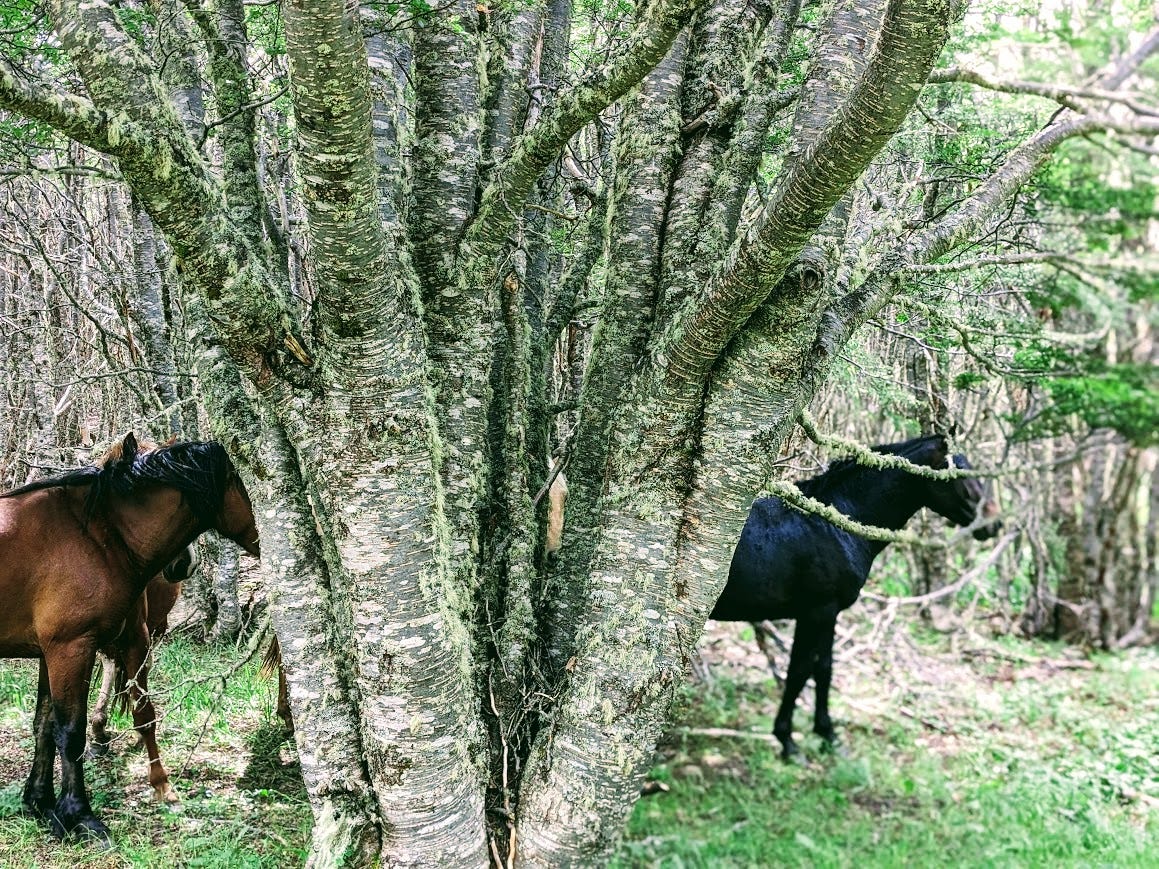
When we speak of ‘an enchanted forest’, we probably think of fairy tales or Disney films, or at least something that is grounded in fiction and childhood. The Western view of societies that believe in the animate spirits of the forest is generally a patronising one: an admiration for the imagination it takes to generate such beliefs, but a denial of their plausibility. Kohn argues that this judgement is much more a reflection of our own societies, that have been historically and progressively drained of enchantment, than others. This disenchantment has been happening at an increasing rate since the industrial revolution; its something that Max Weber wrote about when he spoke of the mechanisation of human society. But even Weber probably never foresaw a time when most of human society would spend the greatest portion of their waking hours staring at a screen.
This move away from belief and faith into complete reliance on rationality- observation, evidence and proof- has deep implications for how we see the world. As we move away from religion and spiritualism, our world becomes more and more literal. If we can’t see it or explain it, we dismiss it, because we cannot anchor it in our systems of scientific belief. But this means that our world is becoming progressively less meaningful, and therefore less enchanted, because meaning as an attachment is dismissed as non-rational. Industrialisation and technology hasten this, as our societies become more intentional and less ritualistic.
The problem for me is that I think when we observe animals, we don’t seem to realise how we are transposing our goal-oriented or rational thinking onto them. And this, accentuated by evolutionary theory, which is inherently directional and goal-oriented, reduces our perception of animals to a very base rationality: one where we seem to limit the content of their consciousness to their base needs and actions.
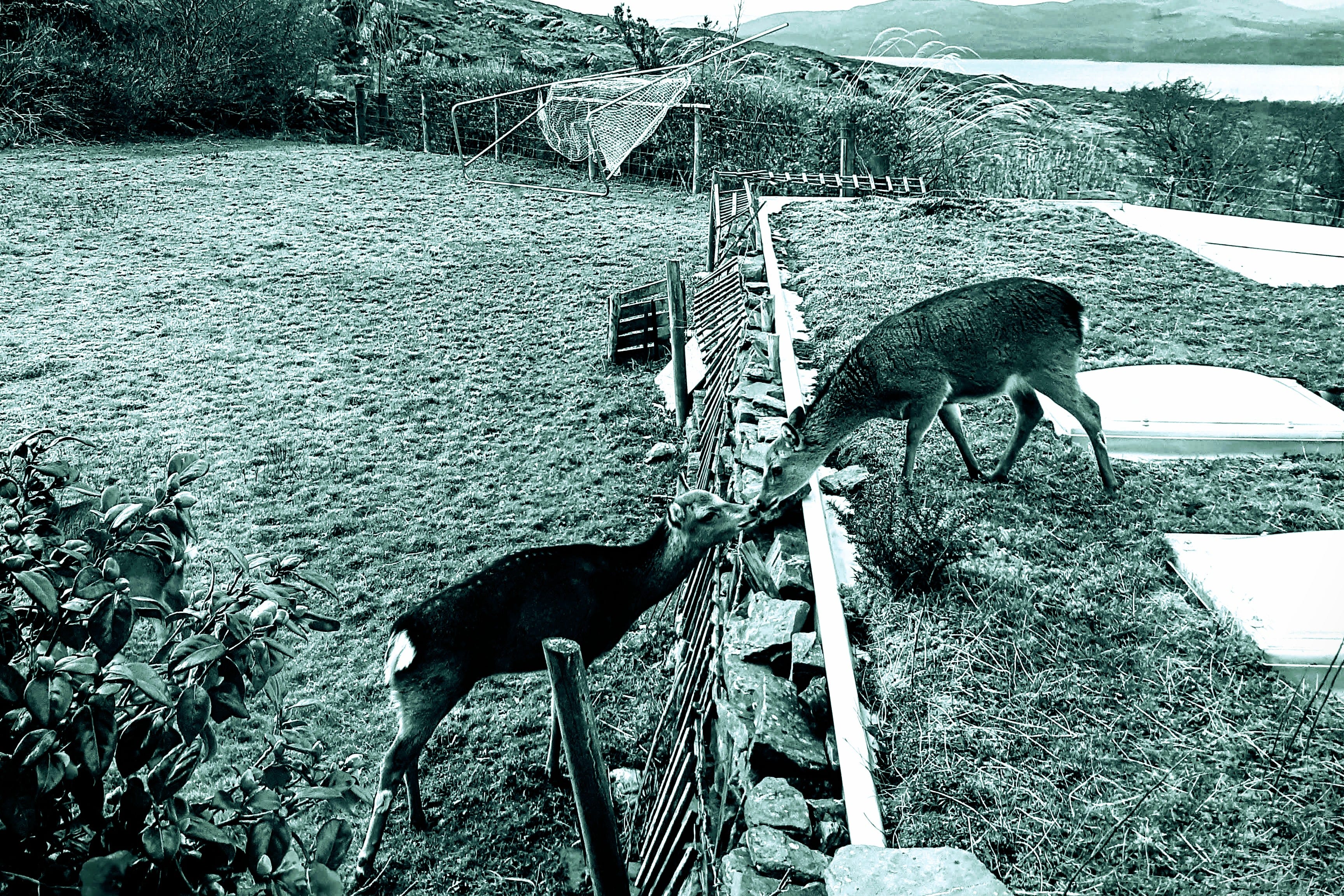
Thinking beyond the human is challenging when you are human, but if we acknowledge that non-humans think, then maybe we can approach their experience of living thought. Because of inter-species barriers with regard to communication however, we over-use words like ‘instinct’, reducing animals to their observable actions and simplifying their existence as goal-oriented: eat; mate; survive, while ignoring their capacity for meaning and ‘living thought’ beyond that impulse of survival.
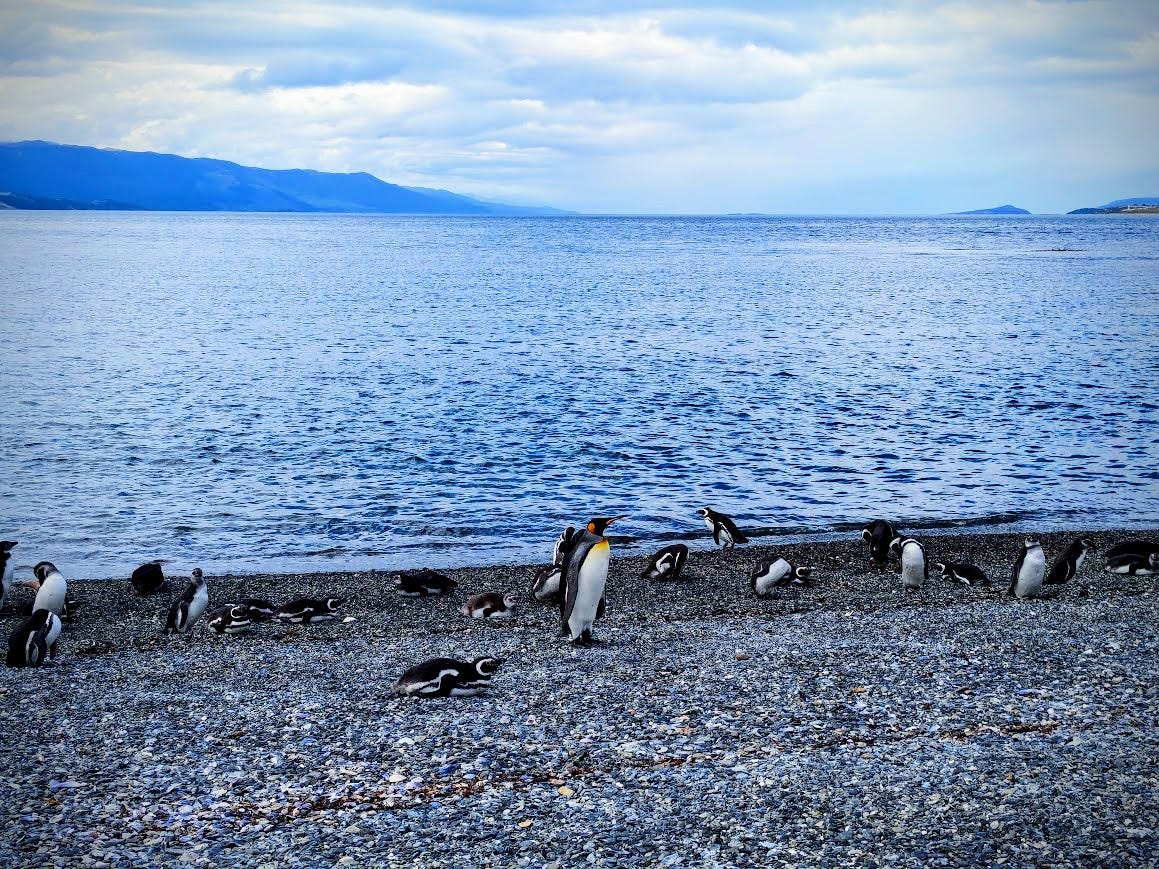
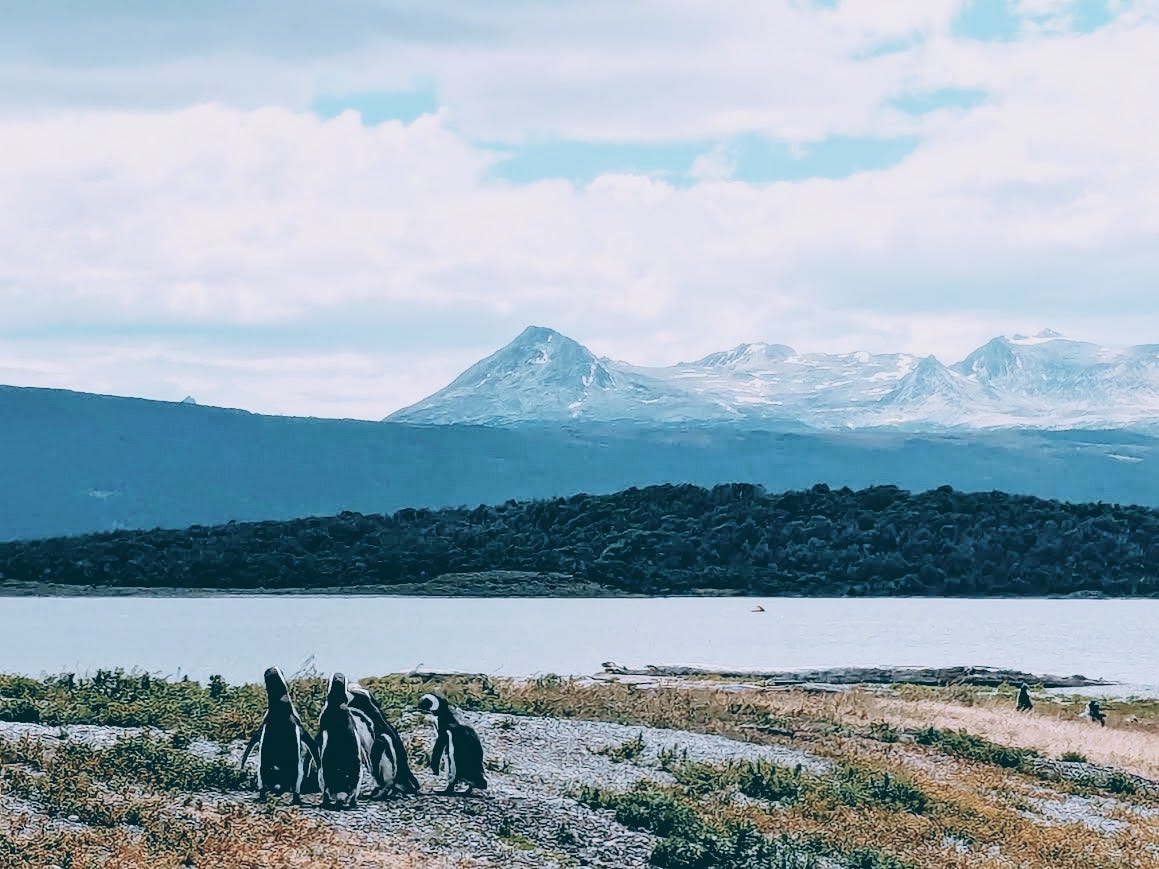
We say that ‘penguins mate for life’, for instance, but still attribute this, and their patterns of paternal care, to their species survival instinct, without considering their capacity for desire and love. Human love may be rooted in desire and survival of the species, but it is heavily conditioned by living thought; initial attraction is informed and sustained by much more, leading to depth of connection. So why do we deny this depth to animal bonds?
For elaborate bird dances, we still use reductionist language like ‘mating rituals’, but why don’t we focus on the mystery of a critical part of that- an appreciation of aesthetics. Our own appreciation of aesthetics is informed by an innumerable amount of influences, memories and sensory inputs; our sense of wonder, seduction and depth is irreducible to instinct, so why should it be for other living beings?
Soul Blindness
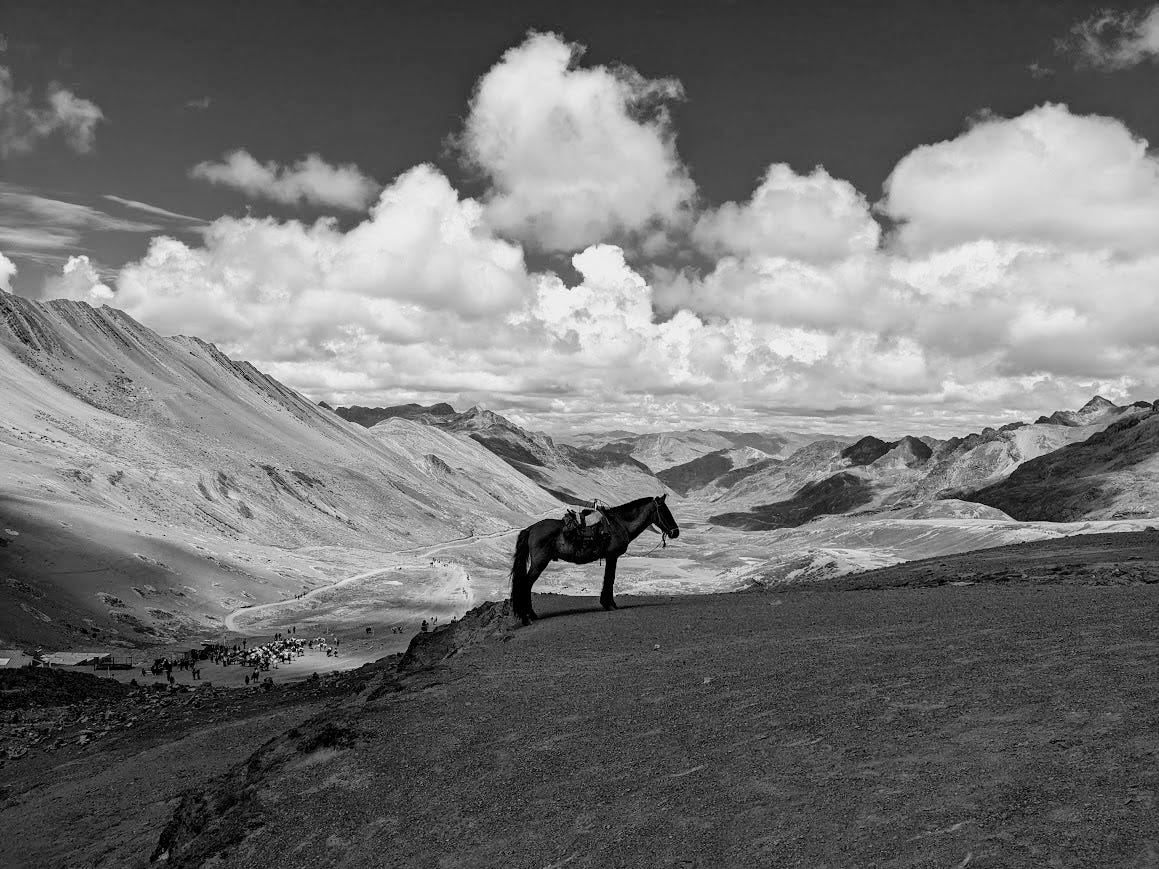
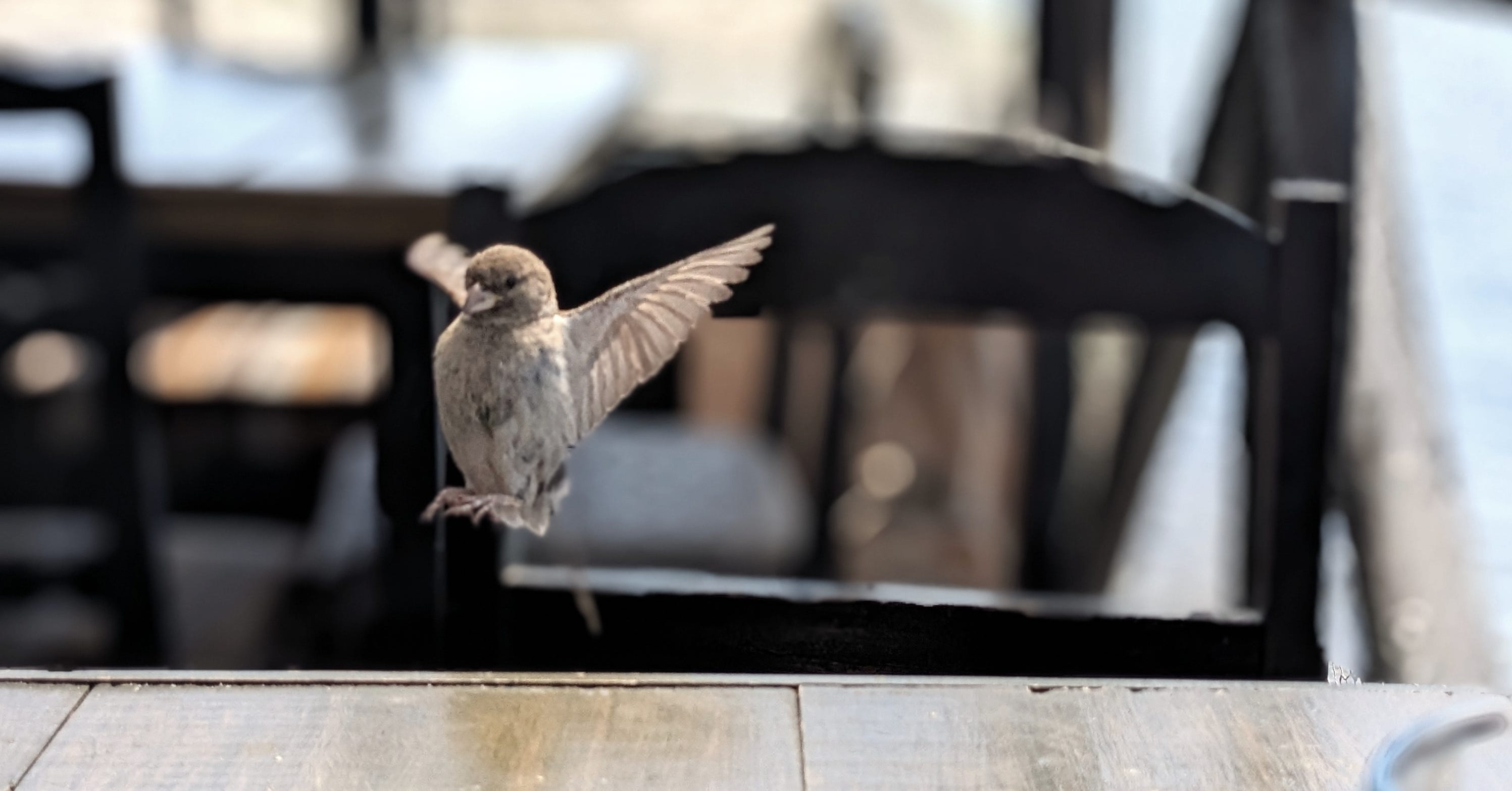
Animals experience living thoughts; they are not machines, but our gaze has been so greatly influenced by goal-orientated evolution theory, that we seem to undermine this fact, albeit mostly subconsciously. Obviously, this has very severe implications for animals, leading us not only to kill and eat them, but also to progressively destroy their environments and the shared world in which we all live.
For Kohn, it also leads us to a state of ‘Soul Blindness’: an inability to recognise the soul or self-hood of other beings that inhabit the universe. As the dependence on rationality and or verified facts increases, the inability to feel beyond the self also increases. ‘Radical Soul Blindness’ is the final termination of this state: a world devoid of meaning and enchantment: a world with no souls, no other selves, no living future- just observable, verifiable life.
Artificial Separation
Over-reliance on evolution theory can hasten this ‘Radical Soul Blindness’, when it comes to how we view other living beings. On the one hand, we are separated from animals artificially and experience a reduction in empathy, but on the other, we view the idea of ‘animals in their natural environment’ as sacrosanct; advocating a non-interventionist position to how we live with animals. But as Emma Harris writes in her lovely book, ‘Wild Souls: Freedom and Flourishing in the Non-Human World’:
‘Evolution is amoral. It’s just a process. It’s just time and sex and death and mutation and chance’.
Evolution is natural, sure, but what about other ‘natural’ processes like starvation or cancer? I think the danger is that when evolution and ‘leave nature in it’s natural state’ arguments try to exist alongside capitalism, we get a selective, American-style approach to conservation, which is informed by awe rather than empathy. In this version of environmental protection, certain areas of immense beauty are fenced off for consumption, or certain large mammals are heavily protected, but those approaches are then considered adequate in terms of conservation. This model, which has tourism, capitalism and profit-making at its heart, has been replicated at a great rate across South America, particularly in places such as Ecuador and Chile, that have historically imitated the US in many aspects of their economy.
Nature becomes just another thing to be consumed: a weekend activity with awe and entertainment at its heart. The very thing that makes it different and distant from us is what is entertaining, and this can serve to further the mental separation between us and animals. And this in turn contributes to the problem, because of course true conservation is not based on a decision, it is a value system, and that must be conditioned by connection and empathy.
So how to reset?
‘Penser Savage’ and Radical Empathy

It's hard to escape the thought patterns that have been moulded and influenced by time and circumstance; it's even more challenging to try to step away from our deeper systems of logic, our ways of understanding the world. But in some ways we do this every night when we dream: we suspend our waking-life logic to a certain extent, momentarily believing in situations that we would consider too fantastic or logic-defying in waking life. In this respect, we can dip into a more free-flowing form of adaptive thought.
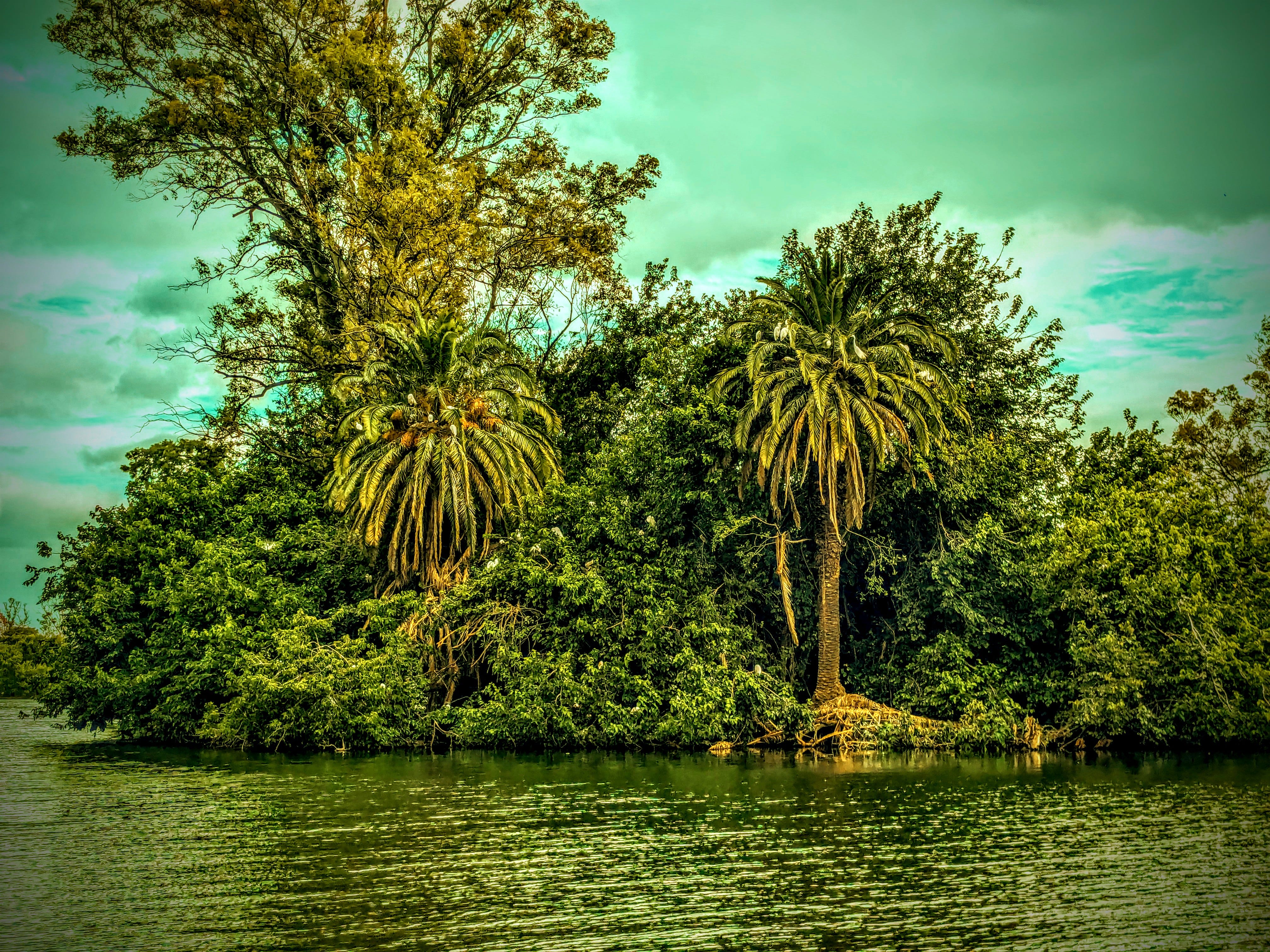
Free flowing thought is the type of thinking Kohn references when he speaks of ‘penser savage’, which is not a reference to ‘savages’ but a type of thinking unbound by human constraints. For him, the ways of the forest offer a potential route to this, not least because the forest is an expansive environment, teaming with varying life. The different ways of being that inhabit the forest- animals, insects, trees and yes, spirits- are the locus on non-human thinking and when you get caught up in the multi-species, memory-laden environment of the forest, you can get closer to the wild, truly free form of thinking that is ‘penser savage’.
Of course, the root of the challenge in attempting to grasp non-human thinking is that thinking is an inherently subjective process. Thomas Nagle’s often-referenced ‘what is like to be a bat’ argument, comes to the conclusion that we cannot possibly think like a bat because we cannot embody the subjective character of their experience. Nagel uses bats as an example because of their advanced echolocation ability, something that distinguishes them further from the human sensory experience. As with dolphins, these extra-sensory attributes, were used as evidence of the unbridgeable distance between human and animal consciousness. Deep into the 20th century, attempts at analysing non-human consciousness were dismissed as too reaching, too unverifiable and too anthropomorphising.
Yet, there is now a vast emerging literature on the advanced consciousness of animals and some of the examples are particularly compelling. Bears and parrots are examples of species now thought to experience a sense of wonder and appreciation of aesthetic beauty. Creatures as small as finches dream, elephants mourn and plan, as do whales, who also sing songs that vary year to year.
One of my favourite examples of advanced animal behaviour is the forest elephants of the Congo river basin, some of whom embark on a pilgrimage to the coast each year, to consume iboga, a hallucinogenic plant found in Gabon and Congo.
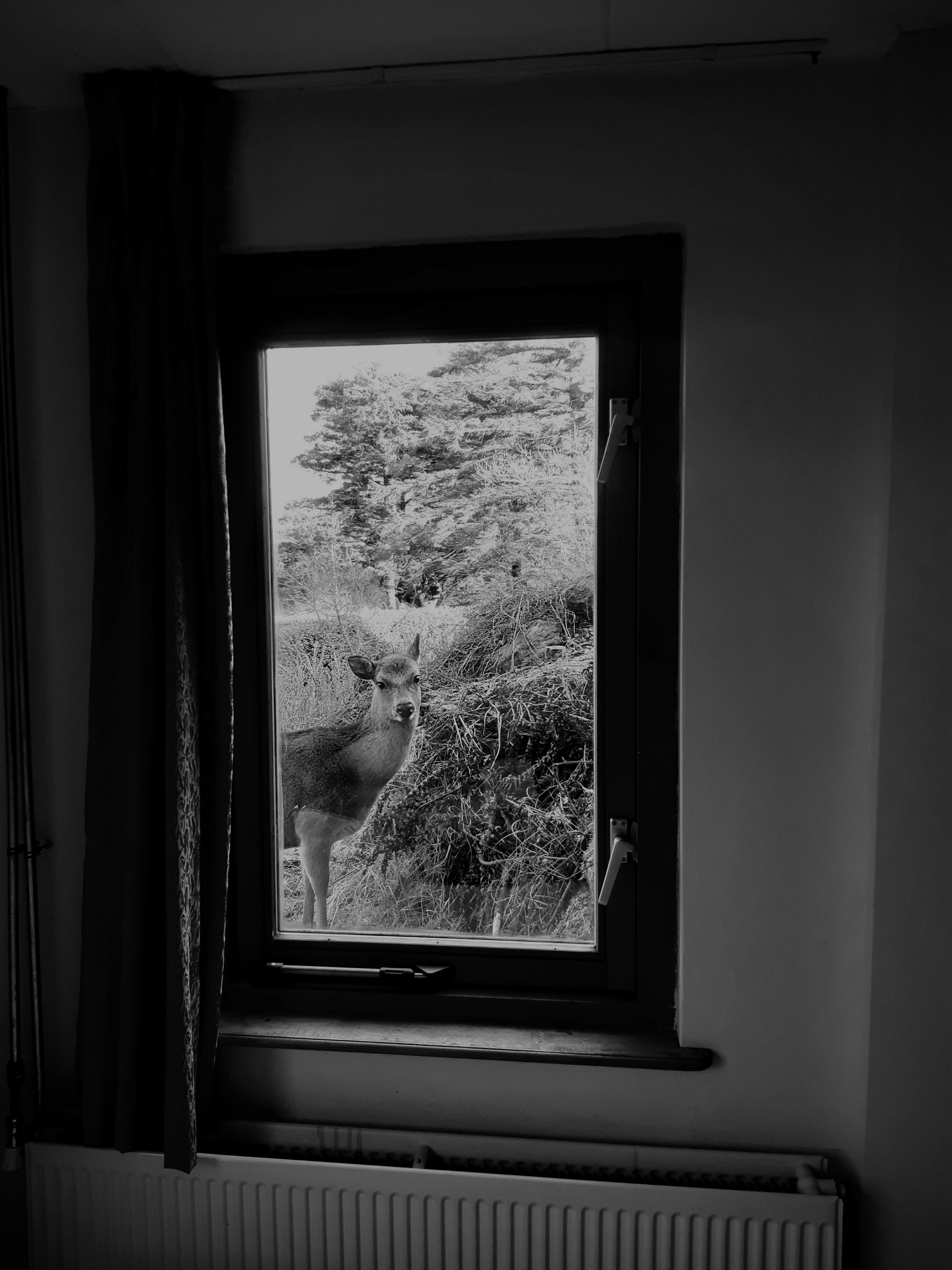
As Emma Maris notes in her book ‘Wild Souls’, new knowledge about the depth and the strength of shared experience between humans and animals should mean that we measure difference in degree rather than in kind. Bridging the gap in this respect will be essential for people to actually act in accordance with non-human preferences. As anyone who works in fundraising for NGOs will tell you, ensuring that people understand the issue is not enough, if you want people to act, or to sacrifice (give time, money etc), you have to succeed in fostering radical empathy. So when it comes to animals, you can appeal to philosophical arguments, such as those made by Peter Singer in Animal Liberation (the 1975 book that is probably still the most celebrated animal rights text), but until you bridge the empathy gap, you’re never going to move enough people from ethics to action.
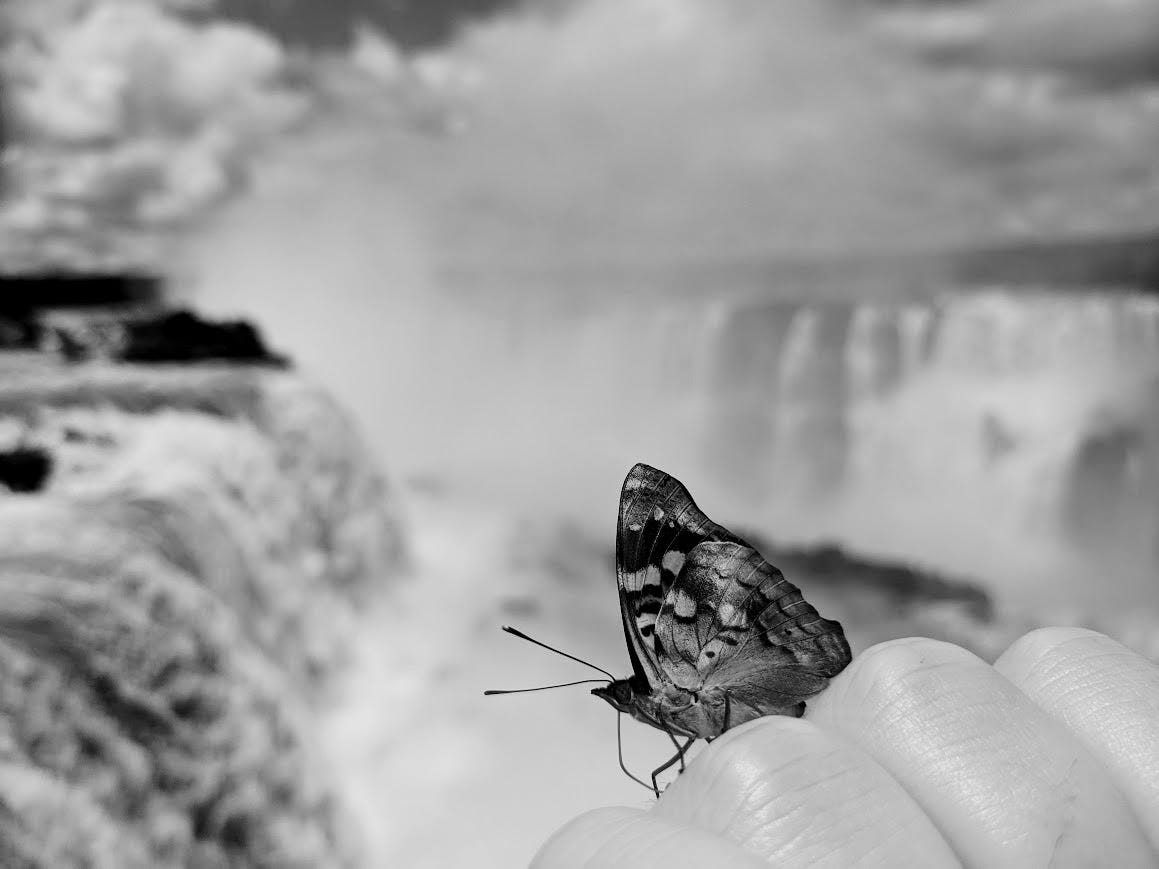
Yet something I can’t stop thinking about is one fundamental difference between us and animals- the capacity for organised violence, a discussion that was recently touched on in a great Guardian Long Read, ‘Can humans ever understand how animals think?’
There are no animals that observably take pleasure in killing if they are not hunting for consumption. The closest thing to organised non-human violence is chimpanzee territorial warfare, or pod-hunting activities of orcas. No animal has ever enslaved another or tried to organise a genocide of another group. As Justin Gregg writes about the supposed progress of humanity in his book ‘If Nietzsche Were a Narwhal’,
“We have generated more death and destruction for life on this planet than any other animal, past and present. Our many intellectual accomplishments are currently on track to produce our own extinction.”
Gregg’s book plays with the idea that the world (and Nietzsche himself) may have been better off if Nietzsche were born as an Arctic Whale, since he drove himself mad with ideas of worth, suffering and supremacy, and these ideas would go on to inform the foundations of fascism and resultant genocide in the 20th century.
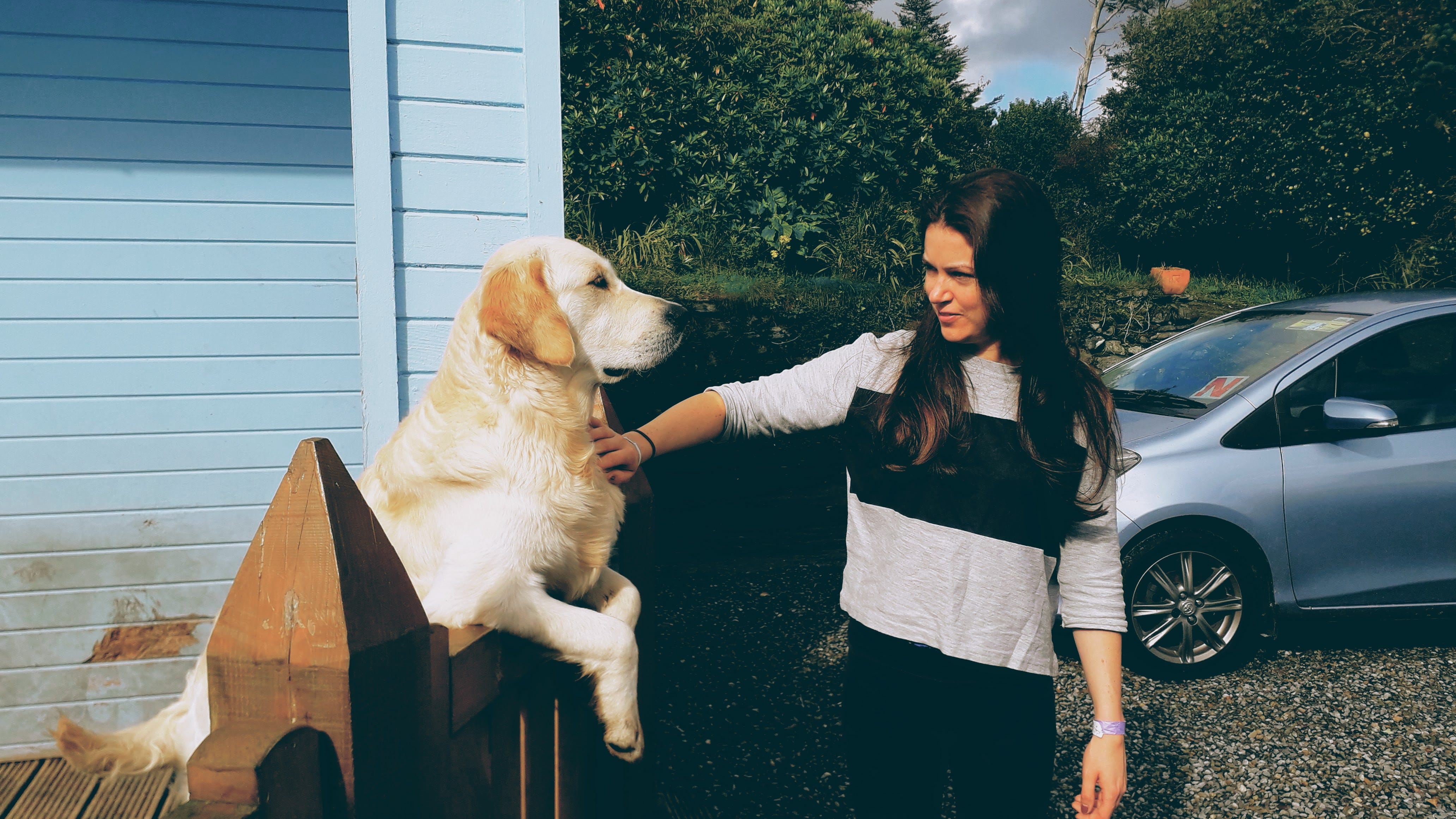
In animals, we have evidence for almost all traits and emotions, even those once thought to be exclusively human: we see kindness everyday in the behaviour of our dogs and self-sacrifice on an even greater scale through silver-backed gorillas that will sacrifice themselves for their group. We now know that animals dream and plan for the future and that they experience melancholy and mourning like us, as exhibited by whales and cows from their young. And we know, from the aforementioned forest elephants, that they also like to get a buzz on in the summer. Of course, we also know that animals can display aggression, sometimes in ferocious extremes. What we do not have evidence of, is that they can hate.
Unfathomable suffering
As I write this, the Israeli genocide in Gaza has entered its fourth month, following the Hamas attacks in October. Prior to taking a sabbatical, I worked as a researcher in the humanitarian response sector for almost 10 years. Researching conflict in the countries where Concern Worldwide operates involves reading a lot of very bleak reports, but I honestly don’t think there has ever been a time so haunting as this one. What the people of Gaza are being subjected to by the Israeli regime- so prolonged, so sadistic- is uniquely disturbing in the modern age. The vicious attacks on Israeli civilians of the 7th of October were horrific, but the fact that the war on Gaza continues to receive such a high level of support among the population in Israel is something that challenges our very conception of human morality, of the supposed inherent compassion of humanity.
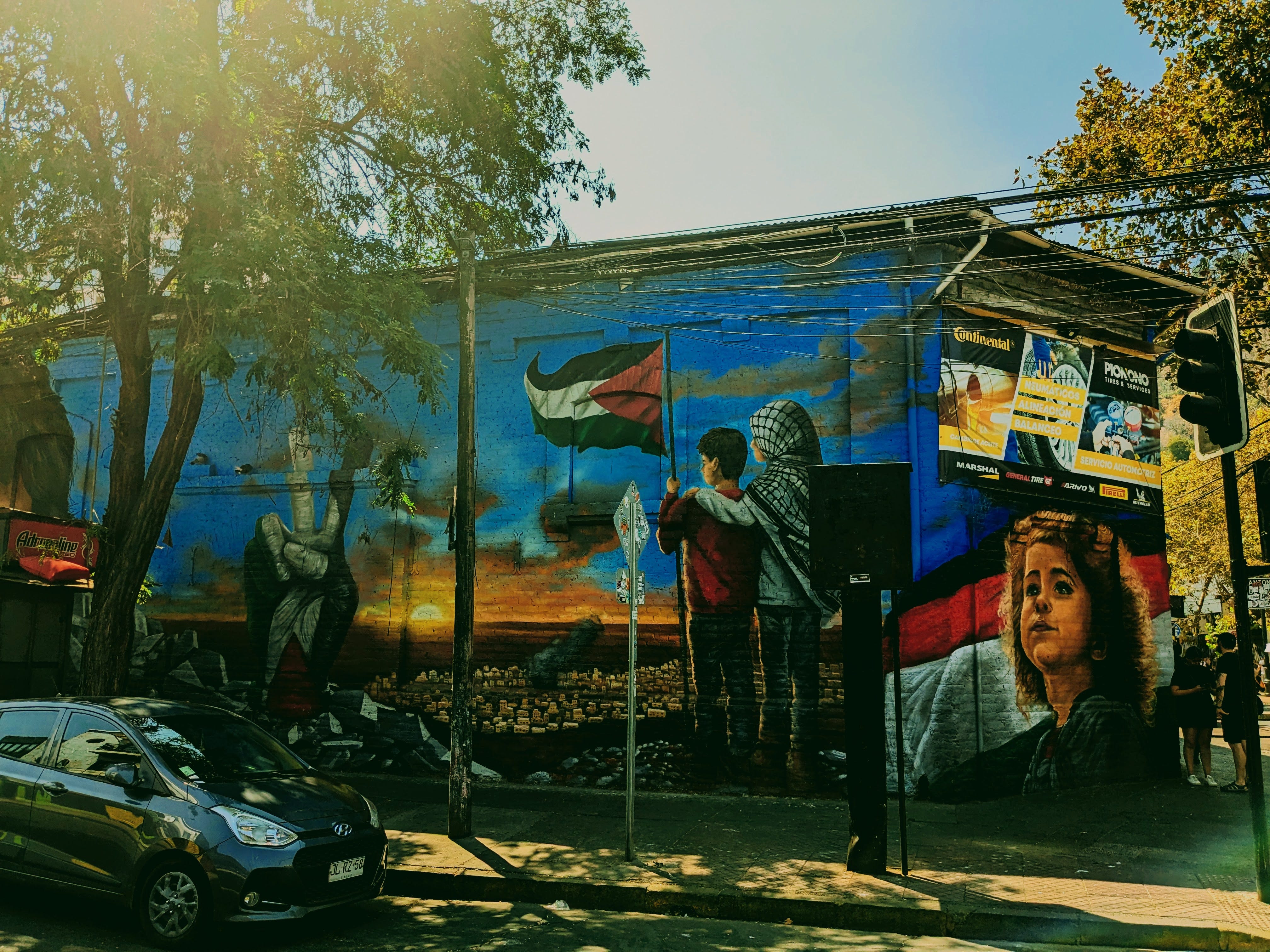
I really don’t want it to seem like I am trivialising the genocide by bringing it into this perhaps very abstract (or daft) essay, but I think, like most people, its very hard not to think of many aspects of everyday life as small in comparison to what is going on in Gaza; and to view issues or philosophical perspectives through the affected prism of the slaughter in some way (I hope this can be read as an overstatement very soon).
The other news story today that is almost as disturbing is the rapid disruption of the Atlantic Gulf Stream as a result of climate change. At the spectre of human violence and ecological devastation, I can’t help but look to non-human forms of intelligence and think we should all be moving at a greater pace towards an elevated appreciation of them. That begins with empathy, I think…
Thanks for reading!
Reading:
Wild Souls: Freedom and Flourishing in a non-human World, Emma Marris
How Forests Think: An Anthropology Beyond the Human
If Nietche were a Narwol, Justin Gregg
The Uttermost Part of the Earth, Lucas Bridges
A Naturalist’s Voyage Around the World, Charles Darwin
Watching:
The Pearl Button, 2015
The Settlers, 2023
Secrets of the Elephants, 2023
Secrets of the Whales, 2022
Chimp Empire, 2023